Blog
From Olive to Emerald Drop: The Dulivo Cold-Pressing Production Stage
Once our green Memecik olives are picked during the early harvest in our 40-decare grove in Kemikler, Milas, a race against time begins. To keep olive oil as pure as freshly squeezed fruit juice — preserving its low free acidity (0.23%) and high biophenols (493 mg/kg) — the olives are carried the same day in ventilated crates straight to the mill.
1. Hand Sorting at the Selection Table
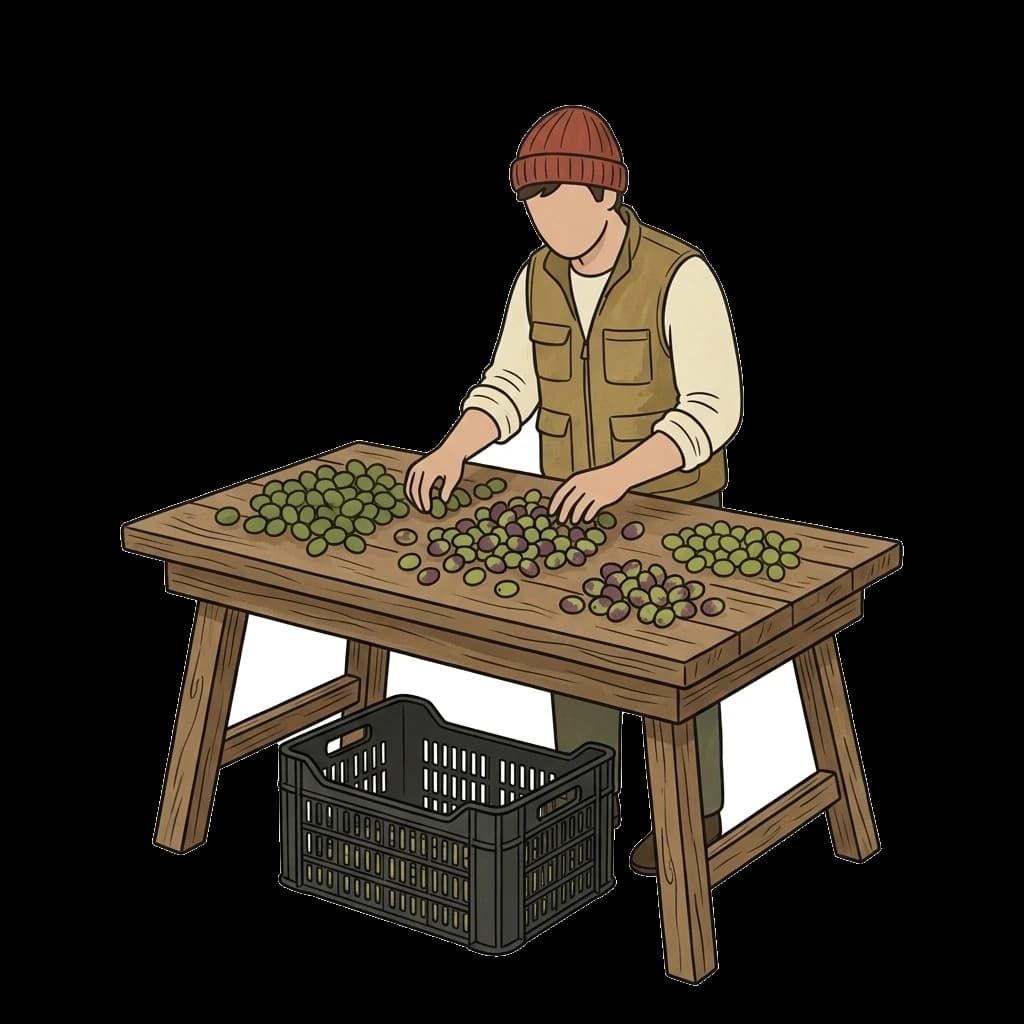
The first stop on our production line is the wooden sorting table. Fresh green and purple-blushed Memecik olives poured from the harvest crates are inspected by hand. Twigs, leaves and bruised fruit are removed so that only firm, healthy olives move forward to pressing.
2. Defoliation, Washing and Crushing
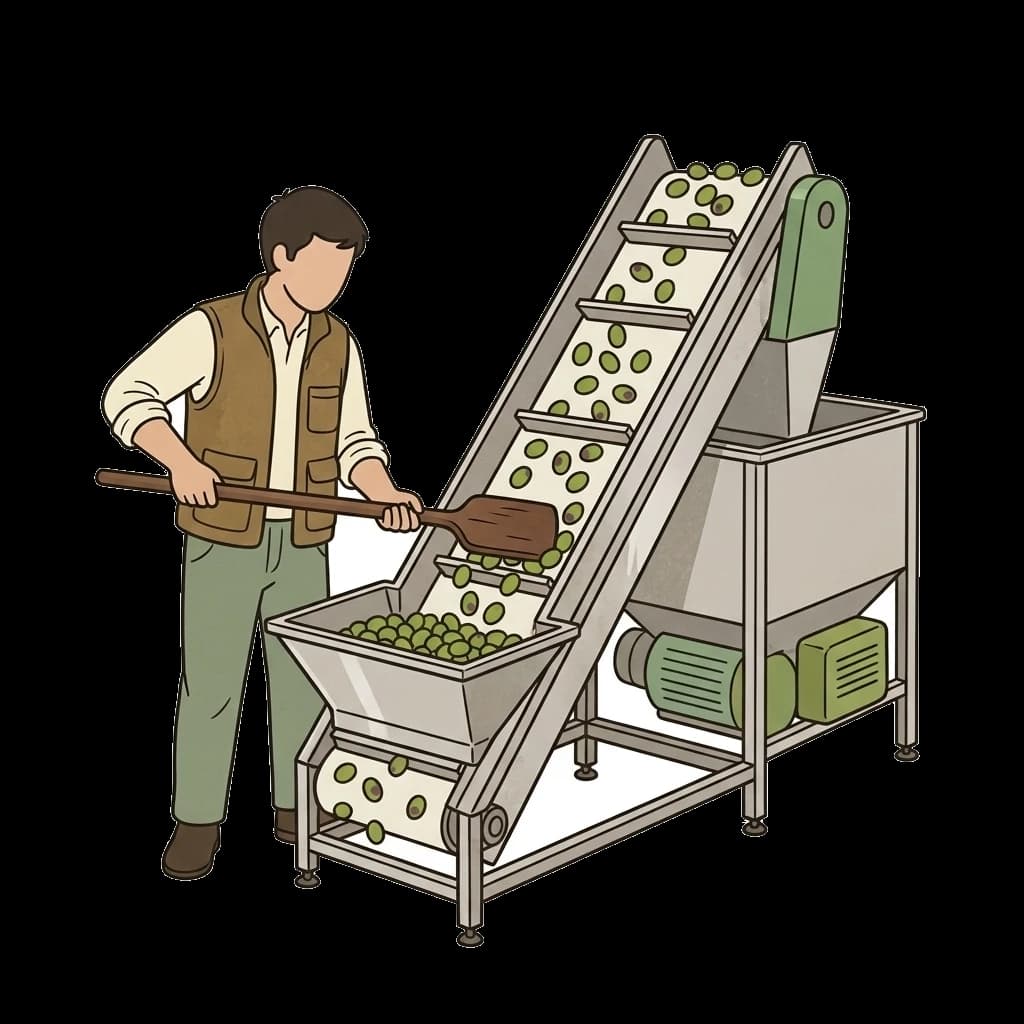
Sorted olives travel up the elevator belt through the air defoliator and clean-water washing bath. Free of dust and leaves, the glistening olives enter the stainless-steel crusher, where the fruit is crushed together with its stone into a fragrant paste that releases green almond notes and natural antioxidants.
3. Malaxation Below 27°C and Cold Extraction
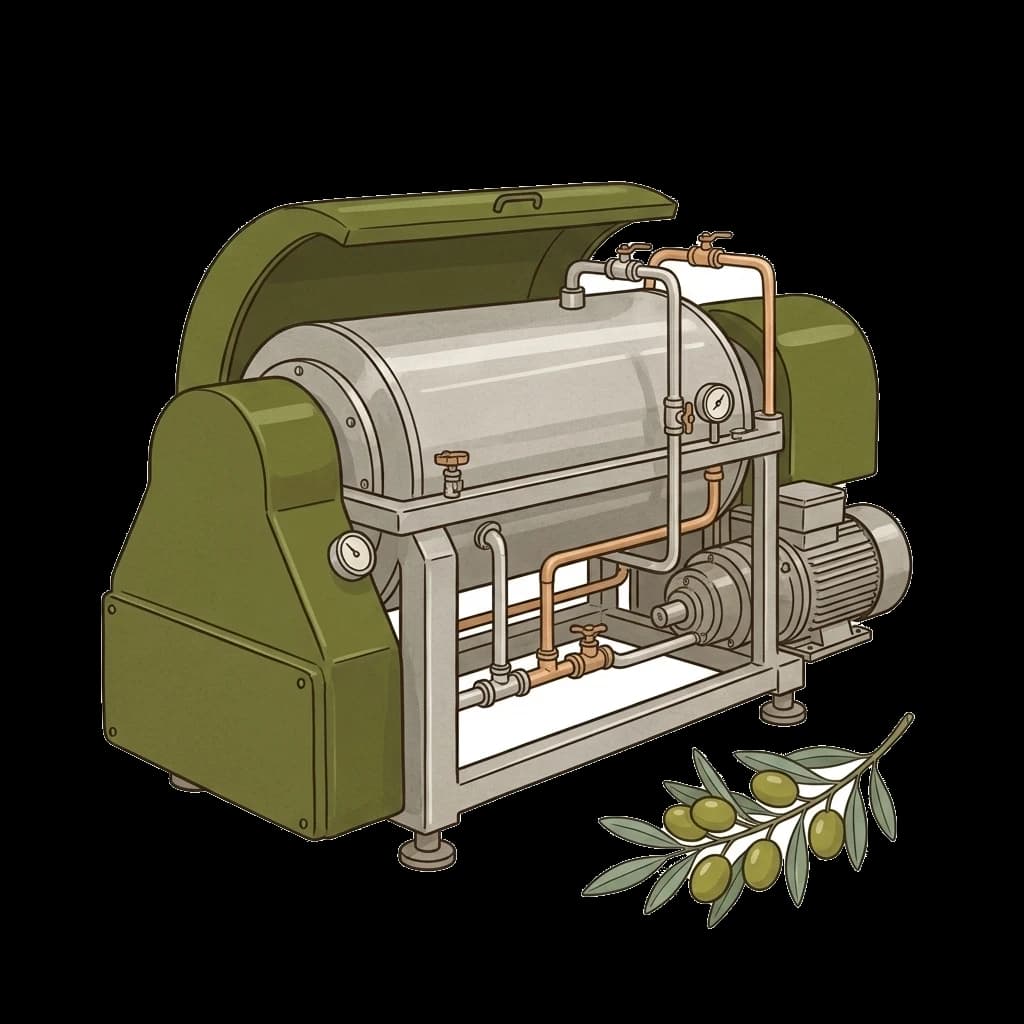
This stage is the heart of cold pressing. The olive paste is gently kneaded inside enclosed stainless-steel malaxers at temperatures strictly below 27°C. Raising the heat would extract more oil, but it would destroy vitamin E (287 mg/kg), polyphenols and volatile aromas. At Dulivo we trust patience rather than heat: the paste passes into the horizontal decanter centrifuge, separating pure oil solely by physical means.
4. The First Emerald Flow and Argon Protection
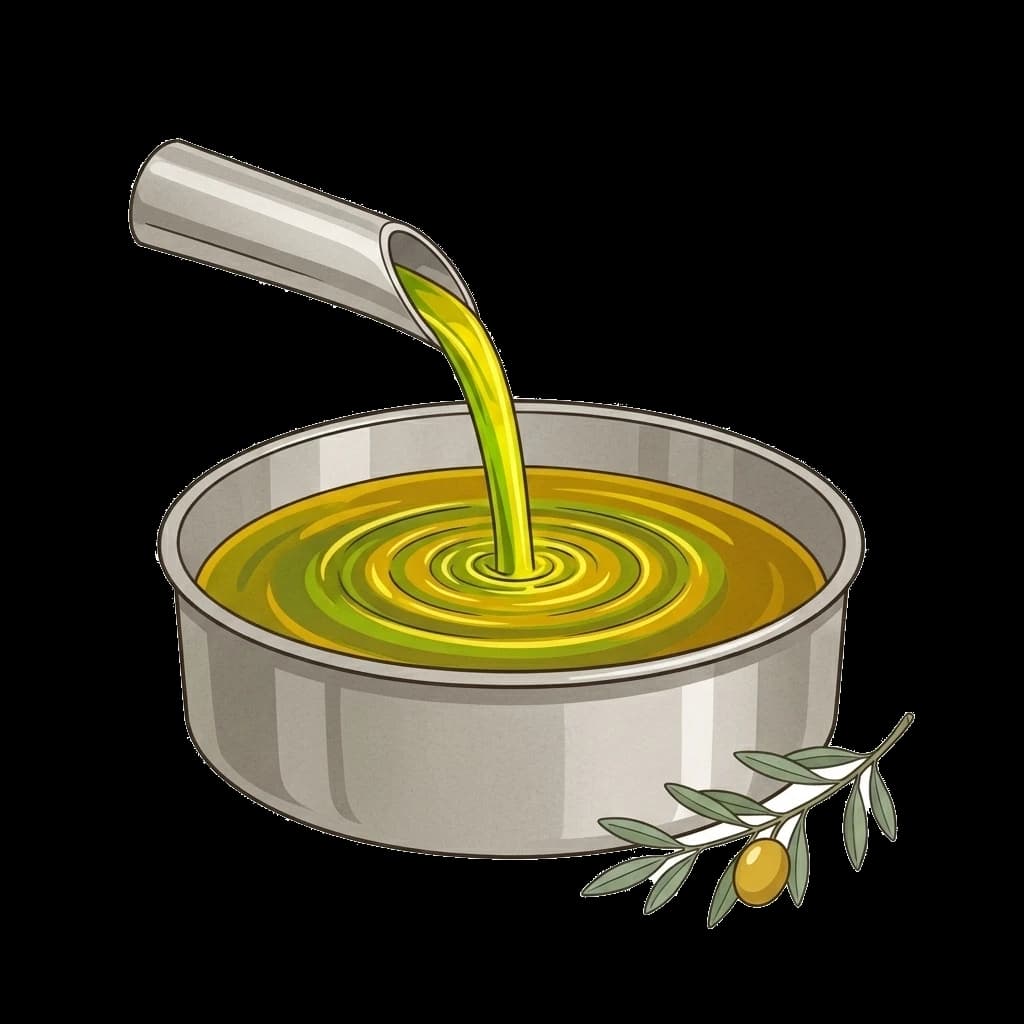
From the stainless-steel spout of the decanter flows the freshly pressed extra virgin olive oil — vivid emerald green, aromatic with fresh grass and green almond. Immediately after pressing, the oil is stored in stainless-steel tanks blanketed with argon gas to prevent any contact with oxygen, locking in its harvest-day freshness all the way to your table.